Sigma 17-40mm f1.8 XF Mount Review for Weddings
Time to eat my words... sort of.
In the kit bag post I wrote that zooms remove creativity. That primes force you to move, to find the shot, to earn the frame. That zooms let you stay put and settle. I still believe every word of that.
Which makes what I'm about to say a bit awkward.
The Sigma 17-40mm f/1.8 DC Art is at Clifton Cameras for £779 in X-Mount. I've been running it on my main X-T3 while the Sigma 56mm f/1.4 stays on the secondary body as my off-hand tele.
I didn't replace my primes. I replaced the need to swap between them.
The actual problem with zooms
The complaint was never that zooms produce worse images. Used well, they don't. The complaint was that they make it too easy to not move. You see something, you reach for the zoom ring instead of your feet, and you settle for the frame instead of finding it. The image is fine. It just isn't deliberate.
That laziness is a habit, not a rule. And it turns out that if you've spent long enough shooting on primes, the muscle memory travels with you. When I picked up the Sigma 17-40mm, I didn't stand still and zoom. I moved to the shot. I put myself where the image needed me to be. Then I used the focal range to fine-tune what the prime mentality had already found. That's a different way of using a zoom. And the results are different.
What f/1.8 constant actually means on a wedding day
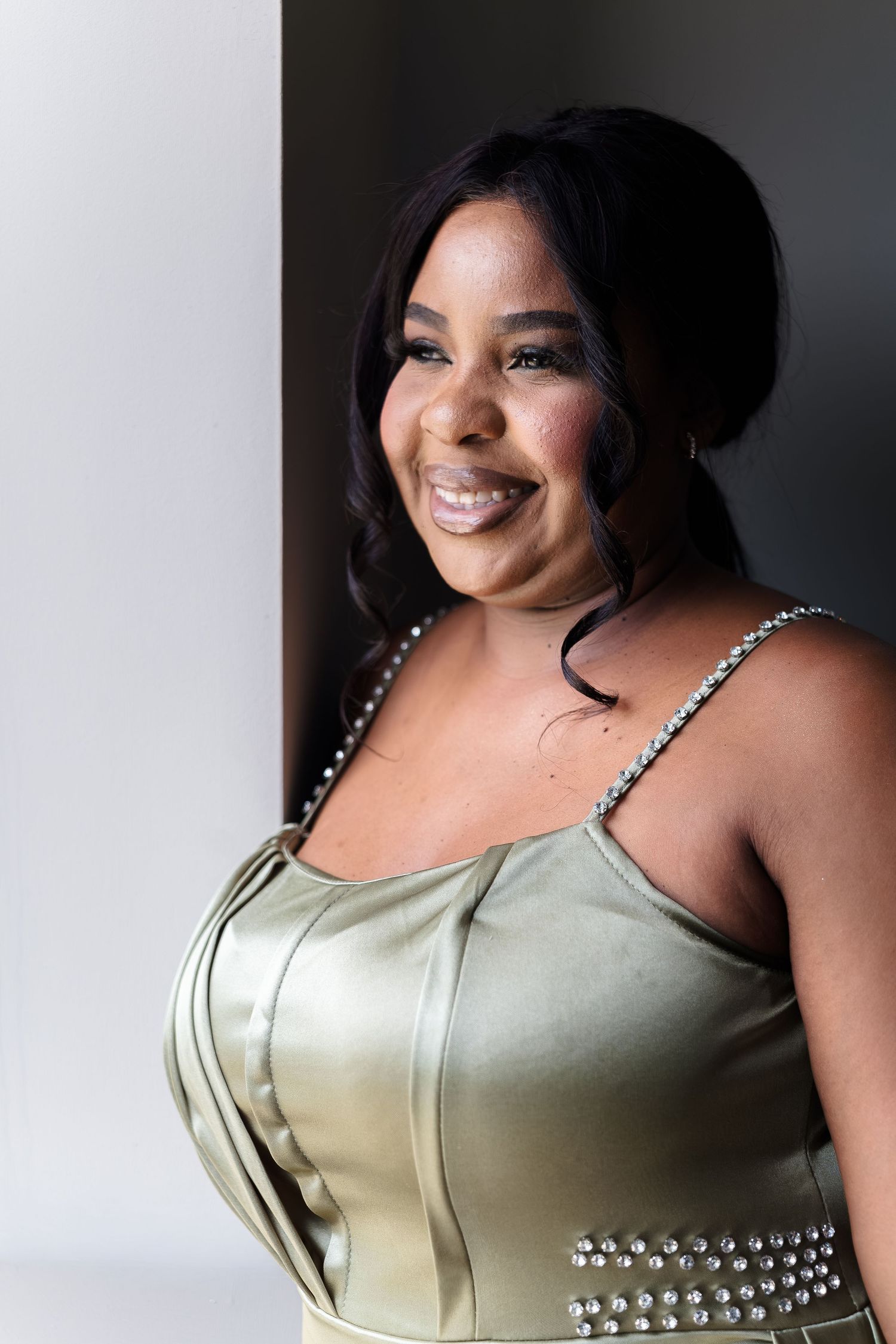
Before anything else about this lens, the aperture needs to be understood. A constant f/1.8 across 17-40mm is not a spec-sheet number you nod at and move on. It means the depth of field, the light-gathering, the background separation - none of it changes as you move through the focal range. You're not on f/2.8 at one end and something worse at the other. You're at f/1.8. The whole time.
On an X-T3 that gives you 25.5mm to 60mm full-frame equivalent at a constant f/1.8. Which means getting ready through to portraits through to the reception, one lens, no aperture compromise. That's the argument.
Getting ready: where the 17mm has no competition in my kit
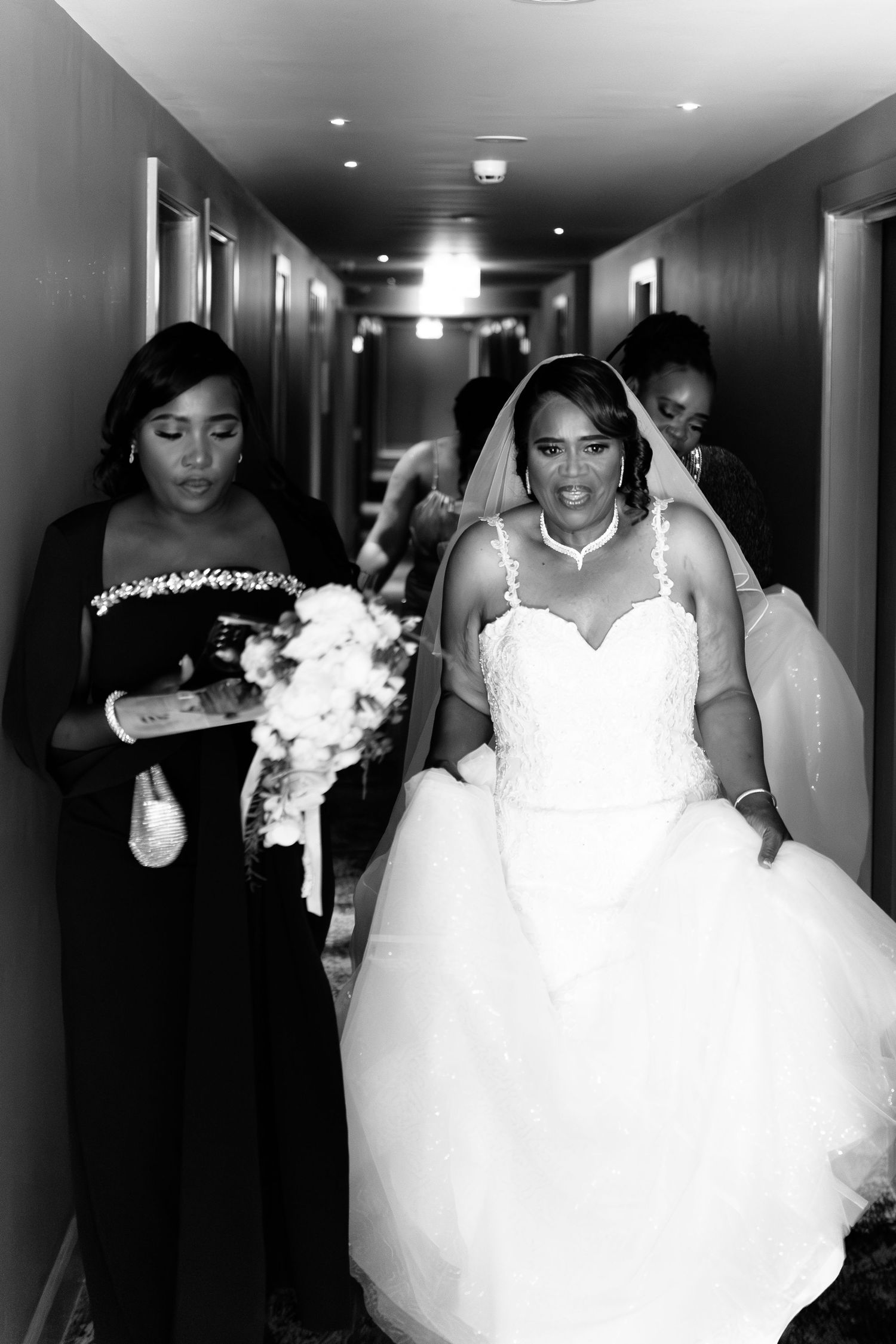
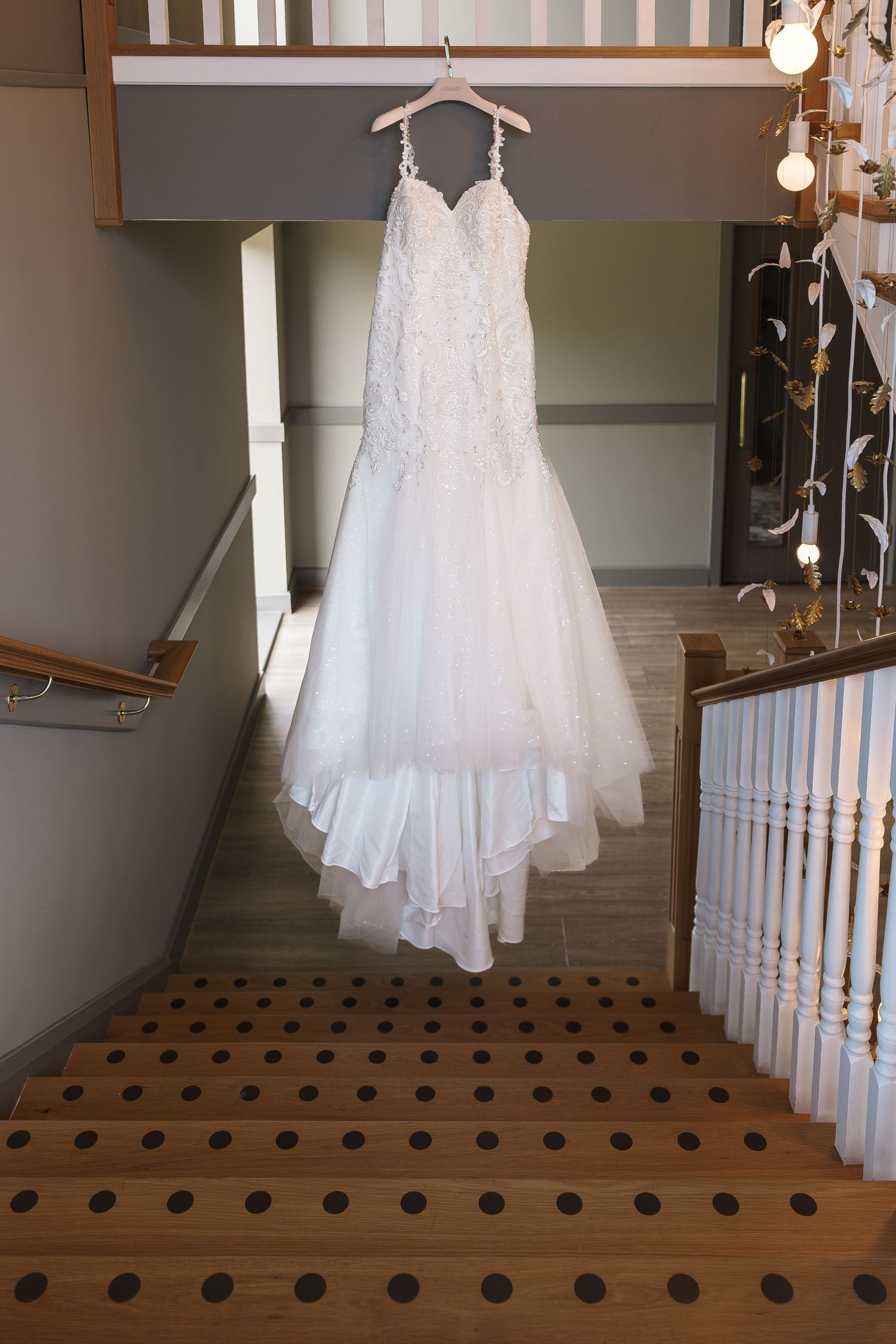
The dress shot is the starting point. Staircase, period property, cathedral veil, the scale of the whole thing needing to land in frame without distortion pulling the architecture apart. That used to be the 16mm f/1.4's job, and it did it well. The Sigma at 17mm does it differently.
The difference is aperture. The 16mm f/1.4 wide open gives you a sharper subject with a slightly busier, more present background. The Sigma at 17mm f/1.8 gives you just enough separation that the space still has drama but the dress is clearly the point of the frame. For getting ready, where you want warmth and atmosphere over clinical sharpness, that rendering is exactly right.
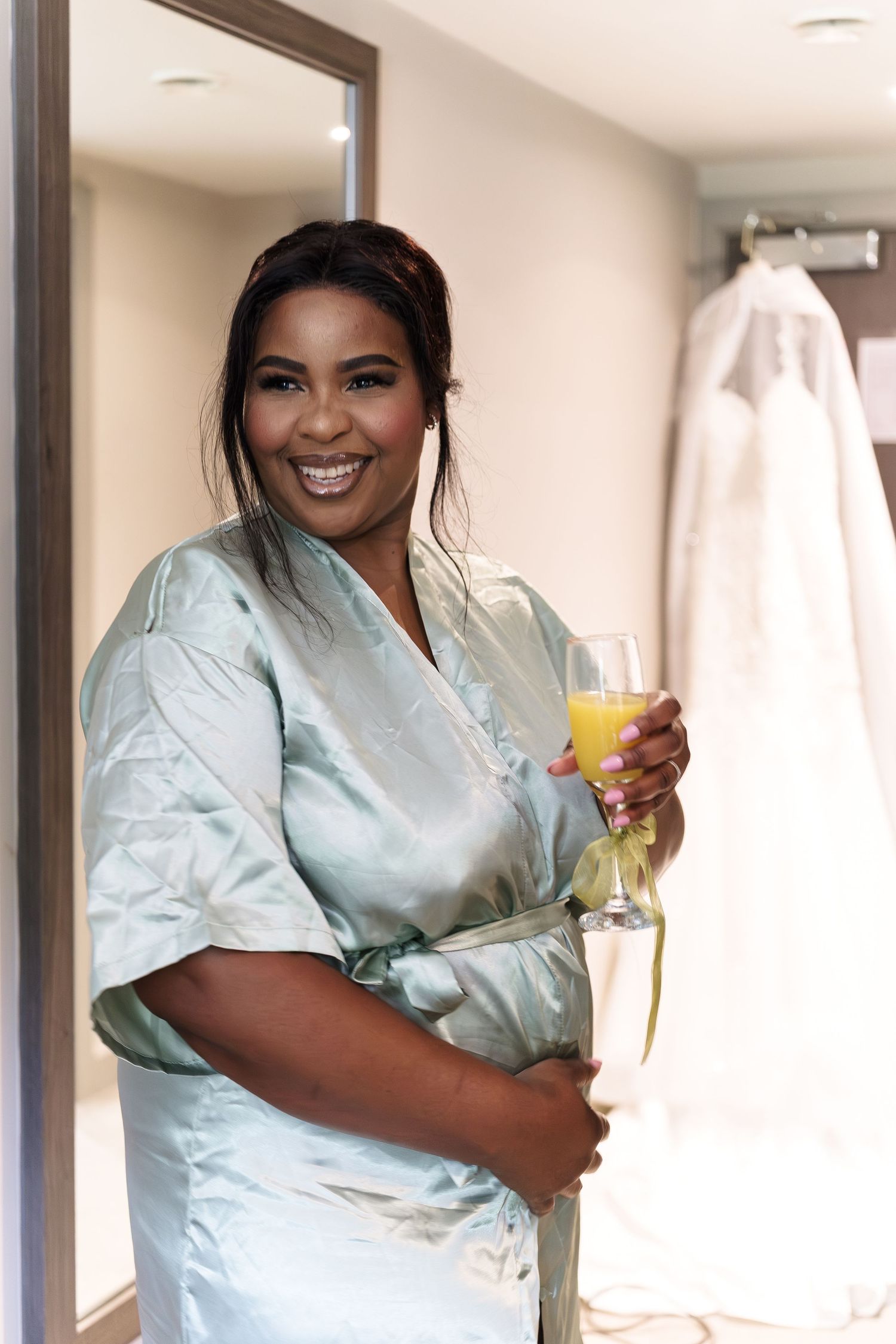
The getting-ready portrait in the robe, drink in hand, the dressed gown just visible through the door behind her - that's f/1.8 in a mixed-light room doing what it does. The background isn't distracting. The subject isn't over-lit. The sage green of the robe and the soft white of the dress in the background sit together in a way that feels effortless and isn't.
The AF: blisteringly quick is not an exaggeration
The Sigma's HLA autofocus on the X-T3 locks with a speed and confidence that removes the system from your thinking entirely. You stop checking confirmation and just shoot. It's the difference between a lens you use and a lens you operate.
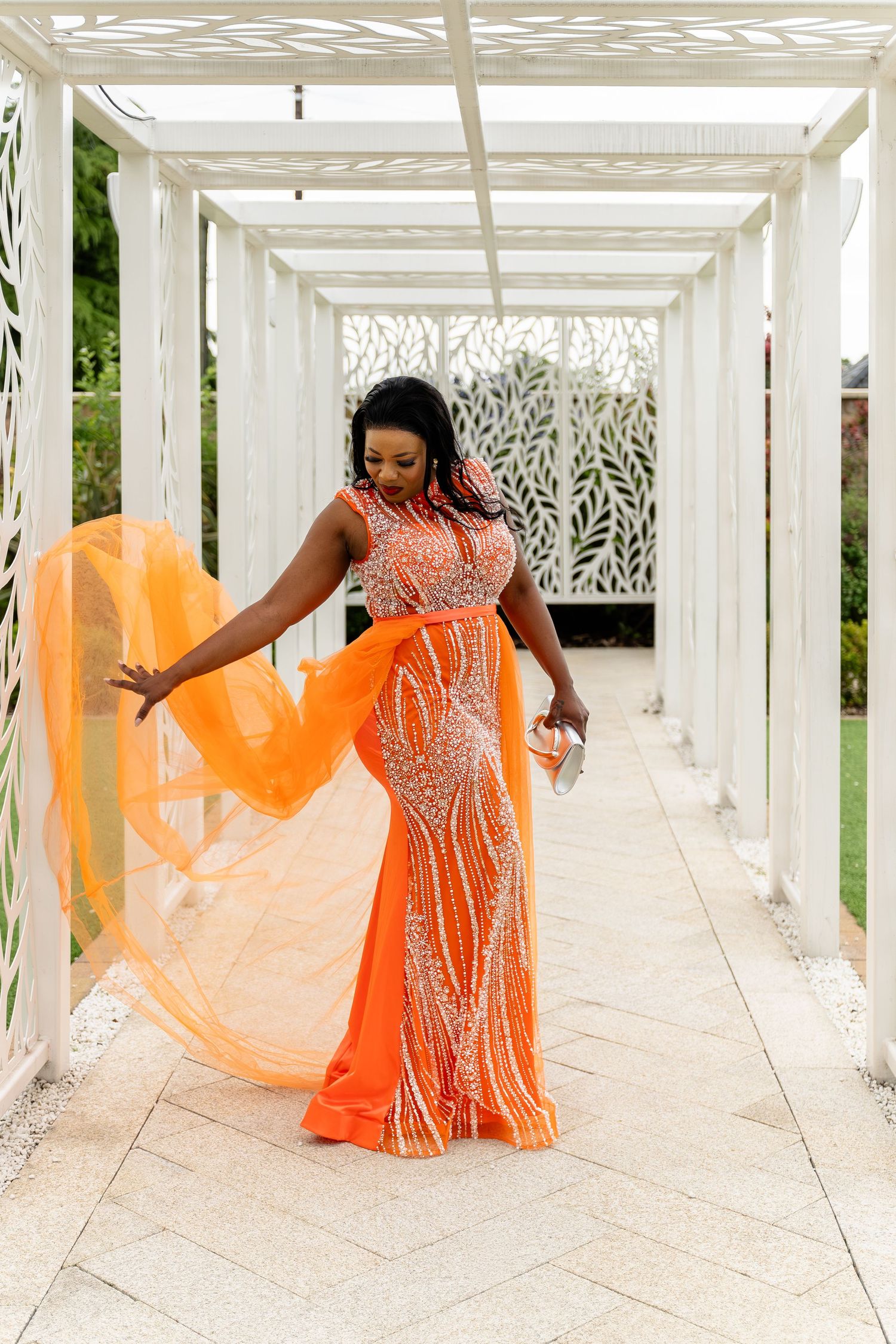
The orange gown shot mid-movement in the pergola walkway is the honest test. Flowing chiffon catching air, subject in motion, fabric in every direction. That is a frame that requires a specific combination of anticipation and AF performance. The Sigma got it. Sharp where it needs to be, the movement held and present, the embellishment resolved. A hesitant AF system turns that into a miss. This one didn't miss.
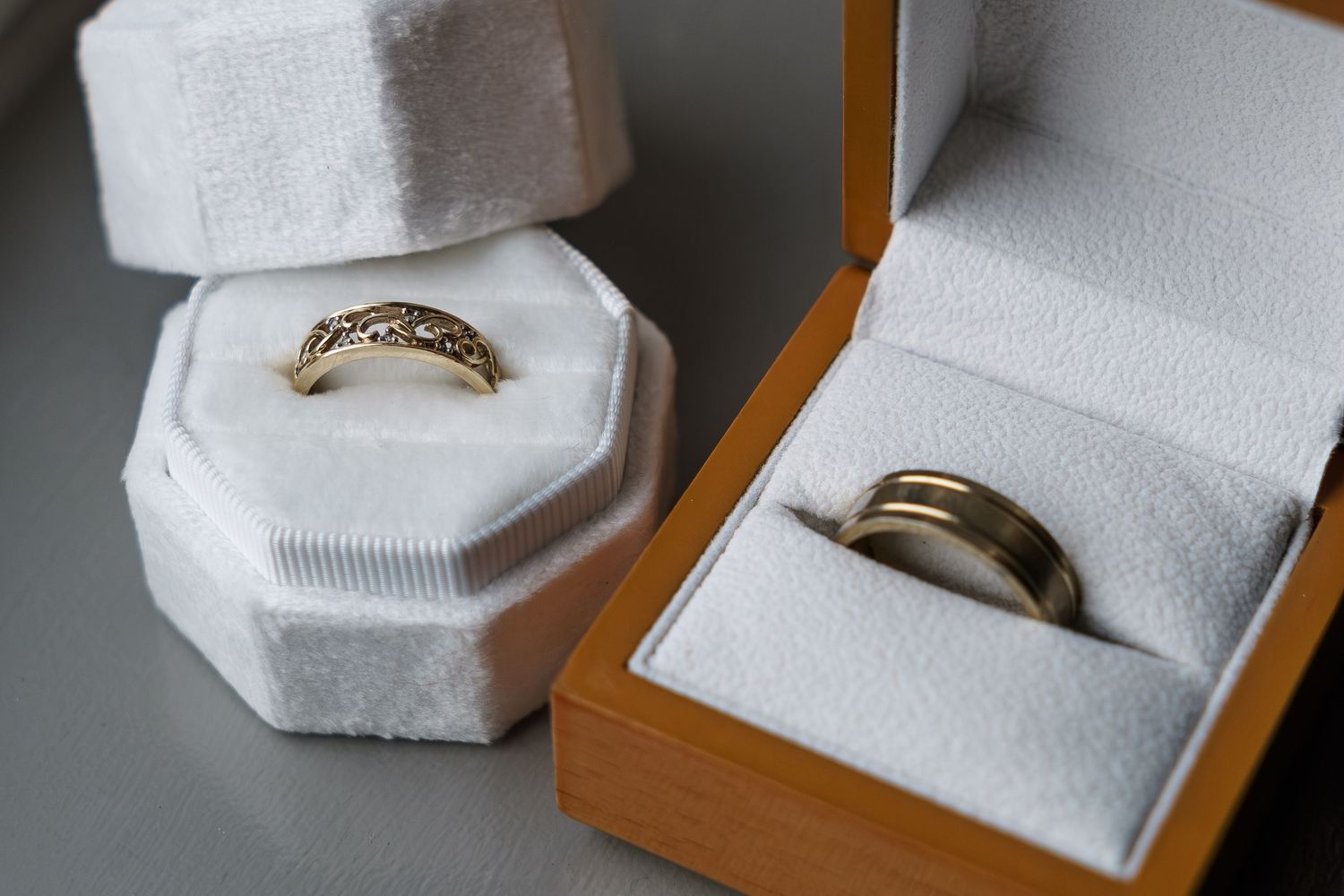
For the rings, where you're working close and the subject is small and low-contrast against velvet, the AF transitions without any drama. The filigree detail on the bride's band holds its resolution. The bokeh on the background boxes is smooth without being aggressive. The whole frame has a quality that earns its place in the final edit.
Portraits: the 40mm end and the X-T3 together
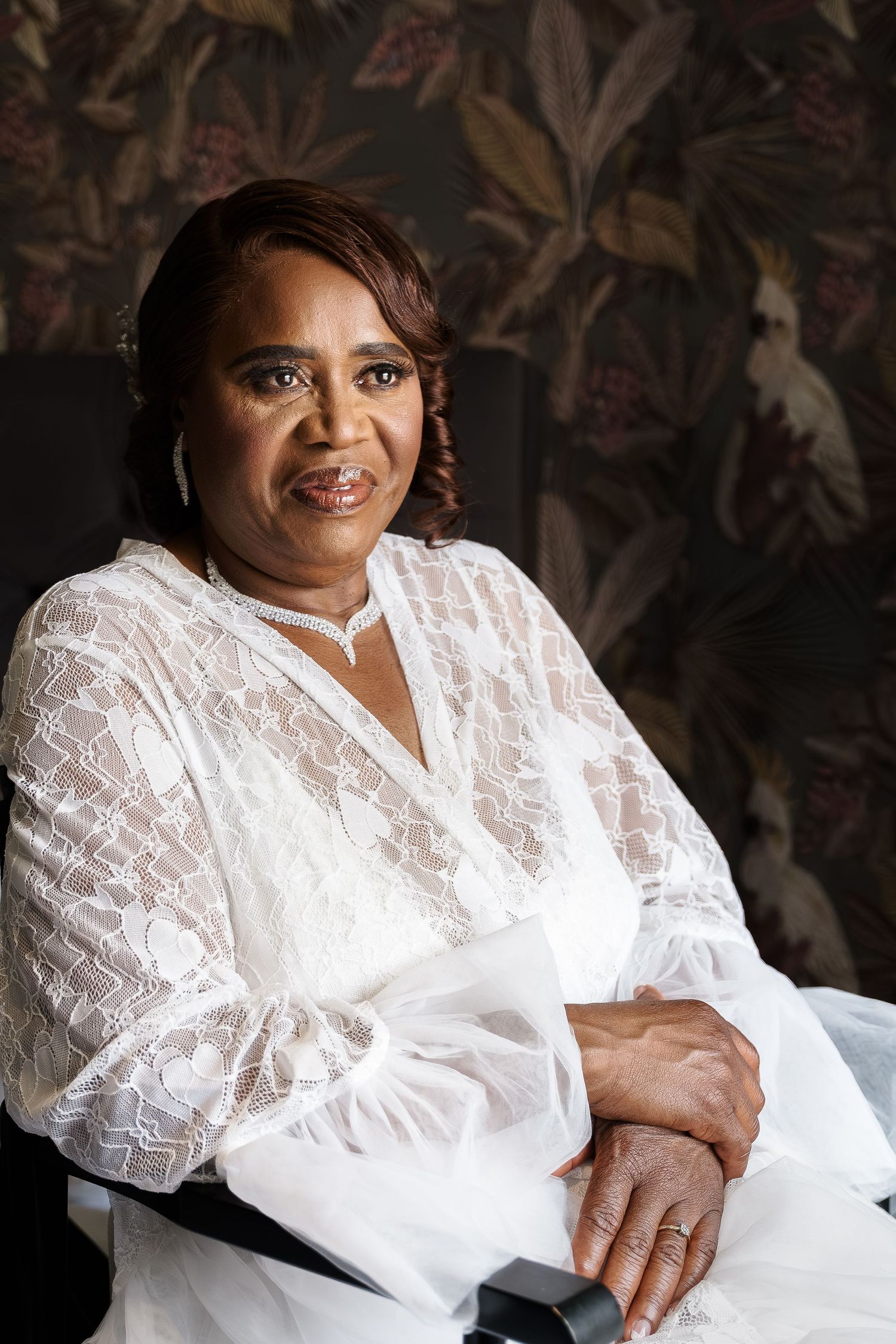
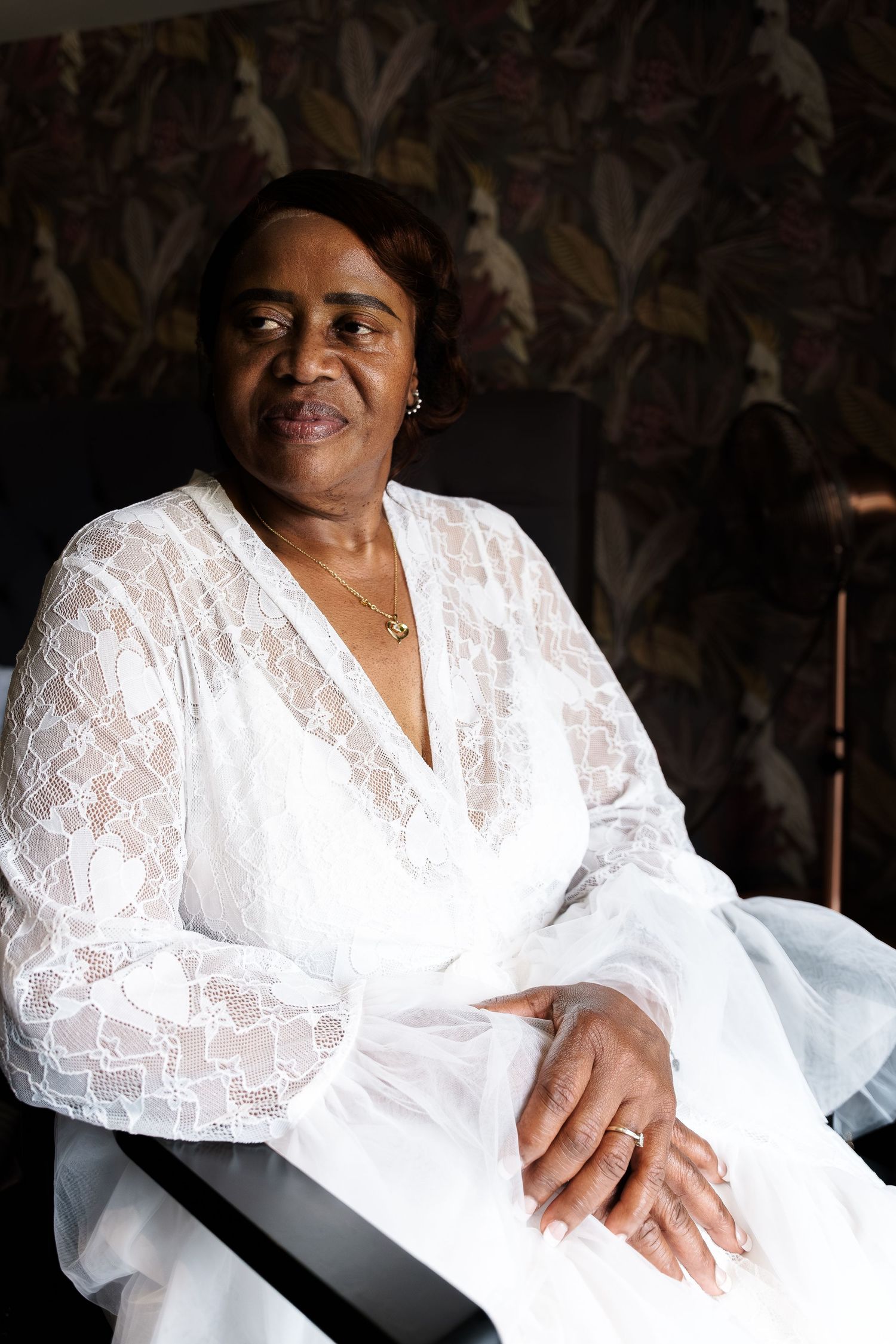
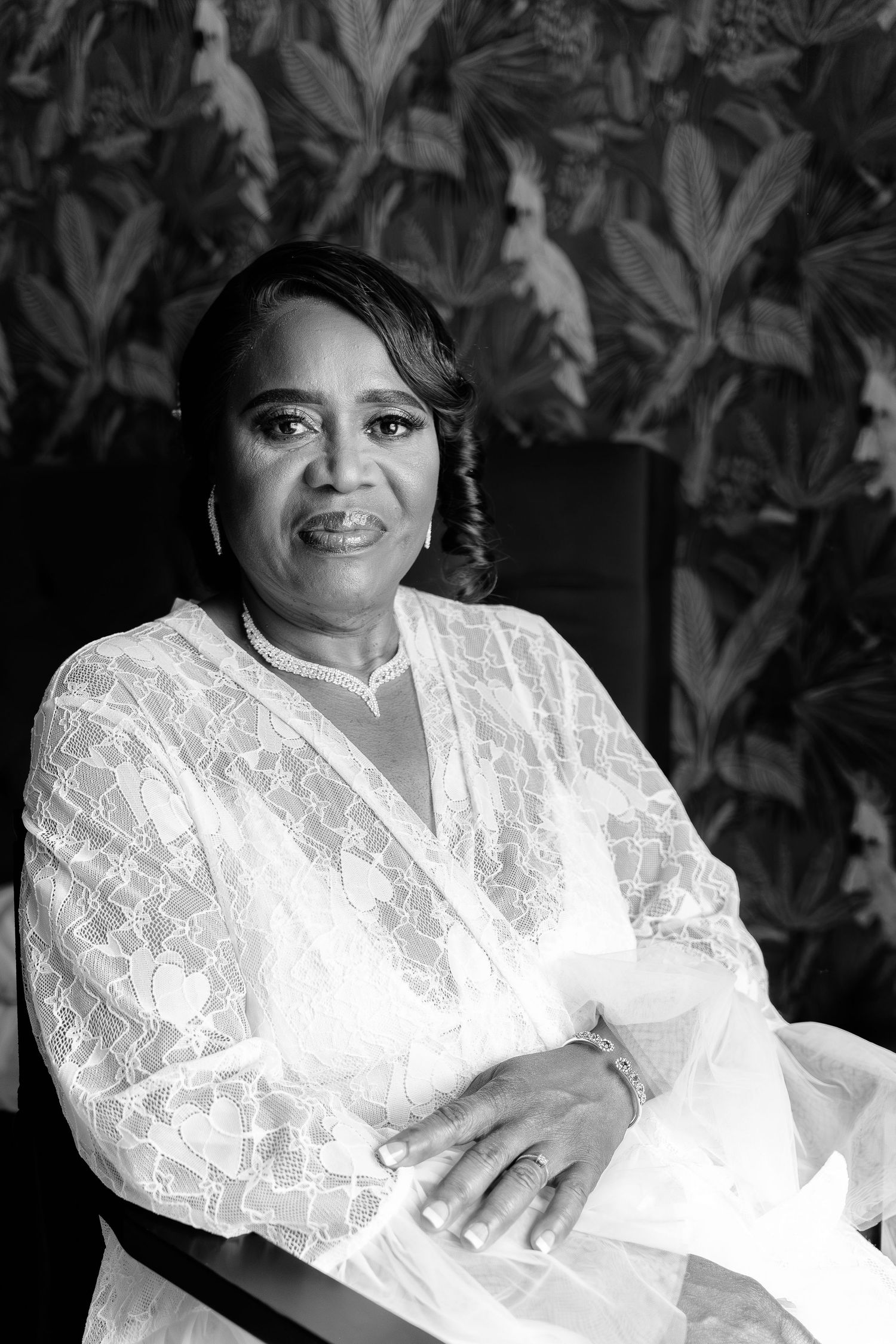
The portraits against the botanical wallpaper are 40mm, f/1.8. Roughly 60mm full-frame equivalent. This is where the prime mentality I mentioned becomes visible in the images.
I didn't zoom to 40mm from ten feet away. I moved to where 40mm made sense for the subject, the background, and the light, and then used the focal length to confirm what my feet had already decided. The result is a frame with genuine depth and subject separation, warm skin tones, and a rendering that doesn't look like it came from a zoom. The wallpaper pattern is there, contextual, not competing. The face holds its detail. The lace jacket holds its texture.
In black and white the rendering gets interesting. The Sigma on the X-T3 processes micro-contrast with enough presence that a monochrome conversion doesn't flatten the image. The crystal necklace, the catchlights, the fine lace weave - all of it stays. This is what I mean about Fuji colour science being the start and end of the conversation. The Sigma's output pairs with the X-T3's processing in a way that feels native.
Compression is a tool, not a side effect
In the kit bag post I wrote about the 55-200 that you should stop thinking of a zoom as something that zooms stuff in and start looking at what it does to the relationship between your subject and the world behind them. That same logic applies here, just compressed into a single lens at a much more usable focal range.
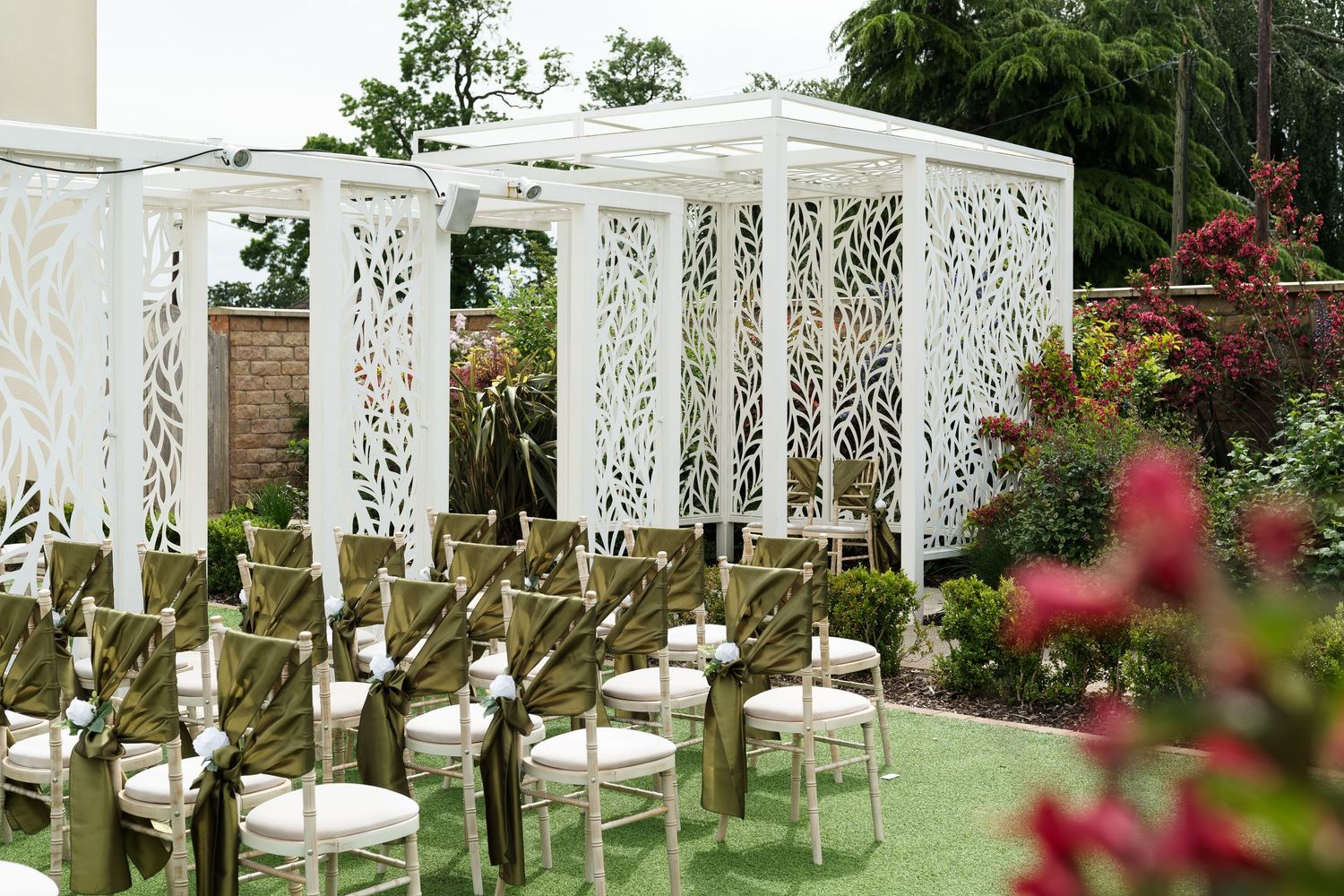
At 17mm on the X-T3, the background is part of the image. The pergola walkway, the ceremony chairs in their rows, the garden behind the stone wall. The environment is present and contextual. You're telling the viewer exactly where the day happened.
Pull to 40mm without moving and everything changes. The background compresses. The distance between your subject and the world behind them collapses into something softer, more abstract, more focused on the person in front of you. The botanical wallpaper in those portraits doesn't disappear - it's still there, still readable - but it stops competing. That shift from 17 to 40mm is the difference between "here's where we are" and "here's who this is."
Having both ends available on one body means making that choice consciously and quickly, rather than being limited by whatever prime happens to be mounted. At 17mm you're including the world. At 40mm you're stripping it back. Used that way, the zoom ring isn't a convenience feature. It's a compositional one.
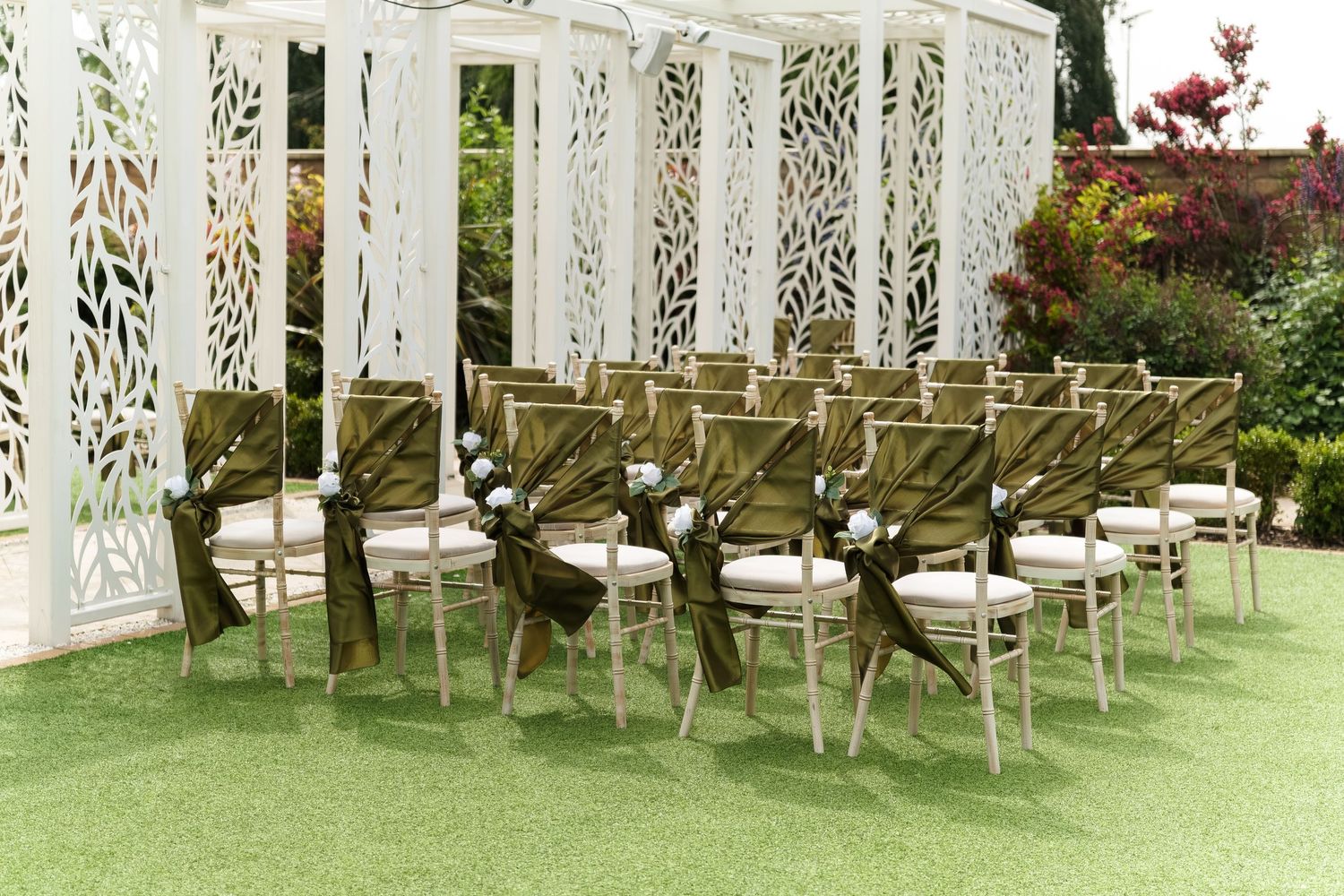
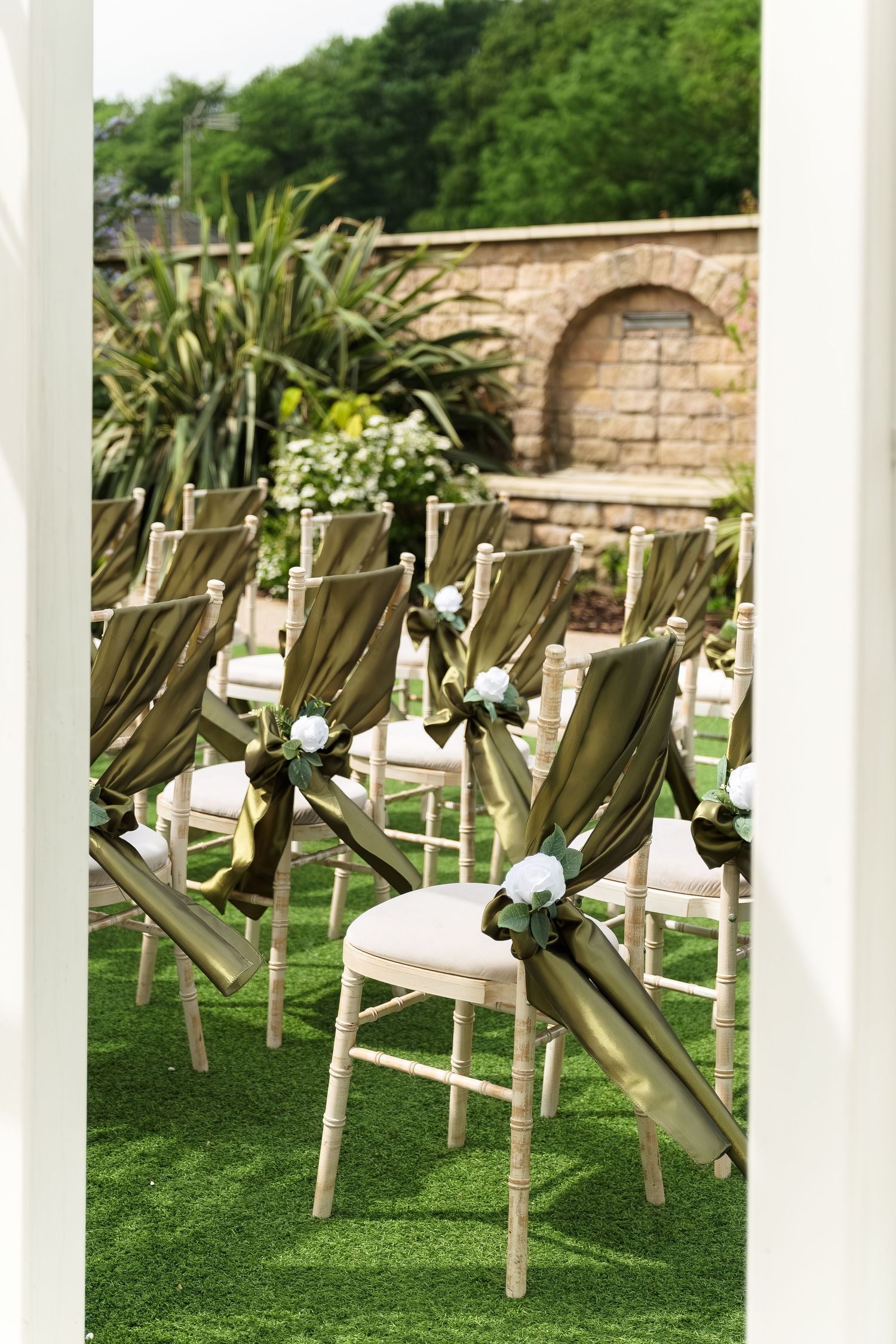
The full outdoor ceremony space is where 17mm earns something the rest of my kit doesn't give me. White pergola structure, rows of dressed chiavari chairs, garden behind the stone wall in full colour. Four minutes before guests arrive. At 17mm from the edge of the space the whole thing is in frame, the geometry of the pergola recedes naturally, and the space reads exactly as it is without distortion bending the architecture into something it isn't.
The close detail of the chair sashes and white rose accents, shot low through the doorway - that's the prime mentality applied. I moved to that position because that was where the image was. The Sigma at a tighter focal length and f/1.8 did the rest. The olive satin catches the overcast light across the folds and the depth of field handles the framing.
The drinks reception and the candid case
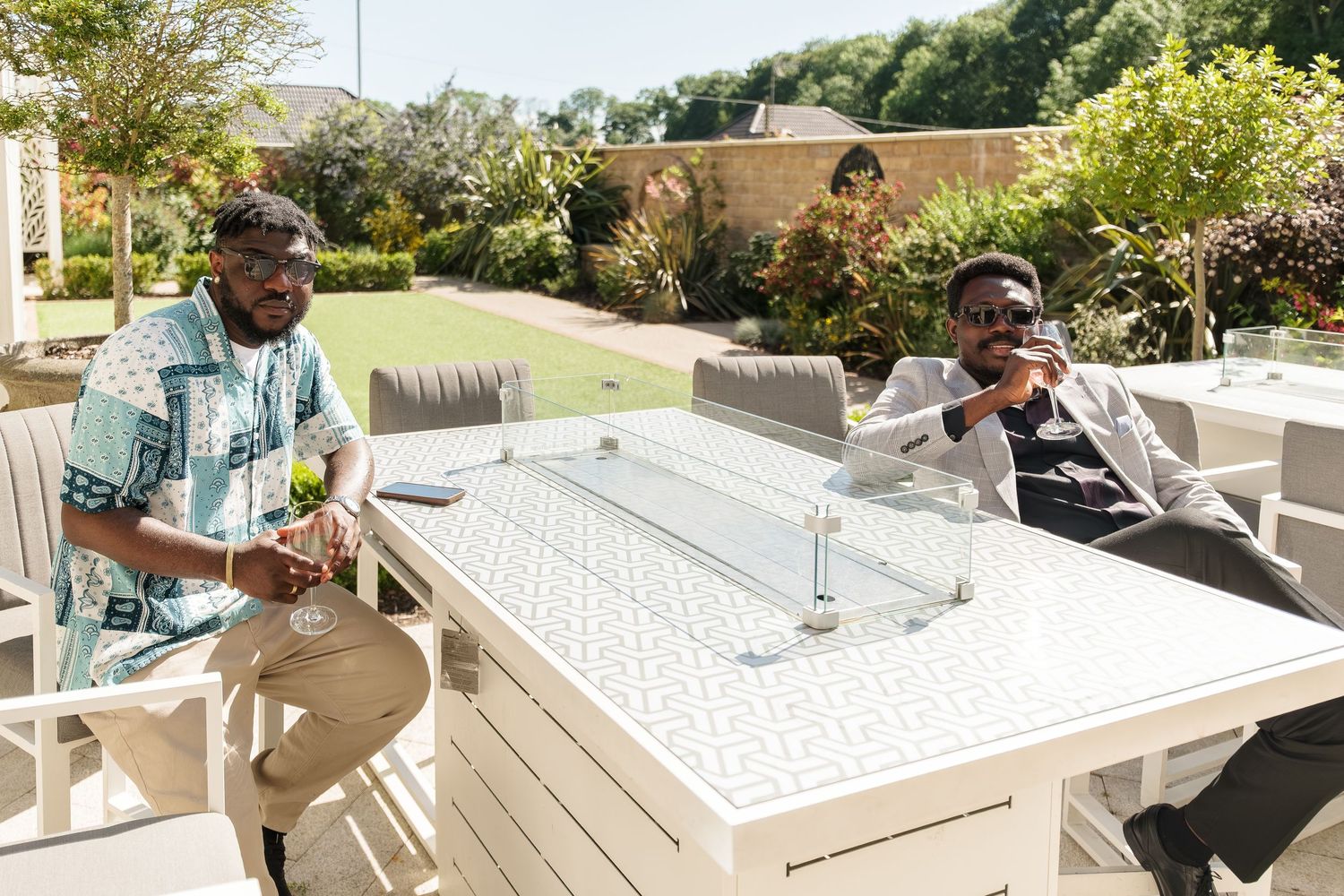
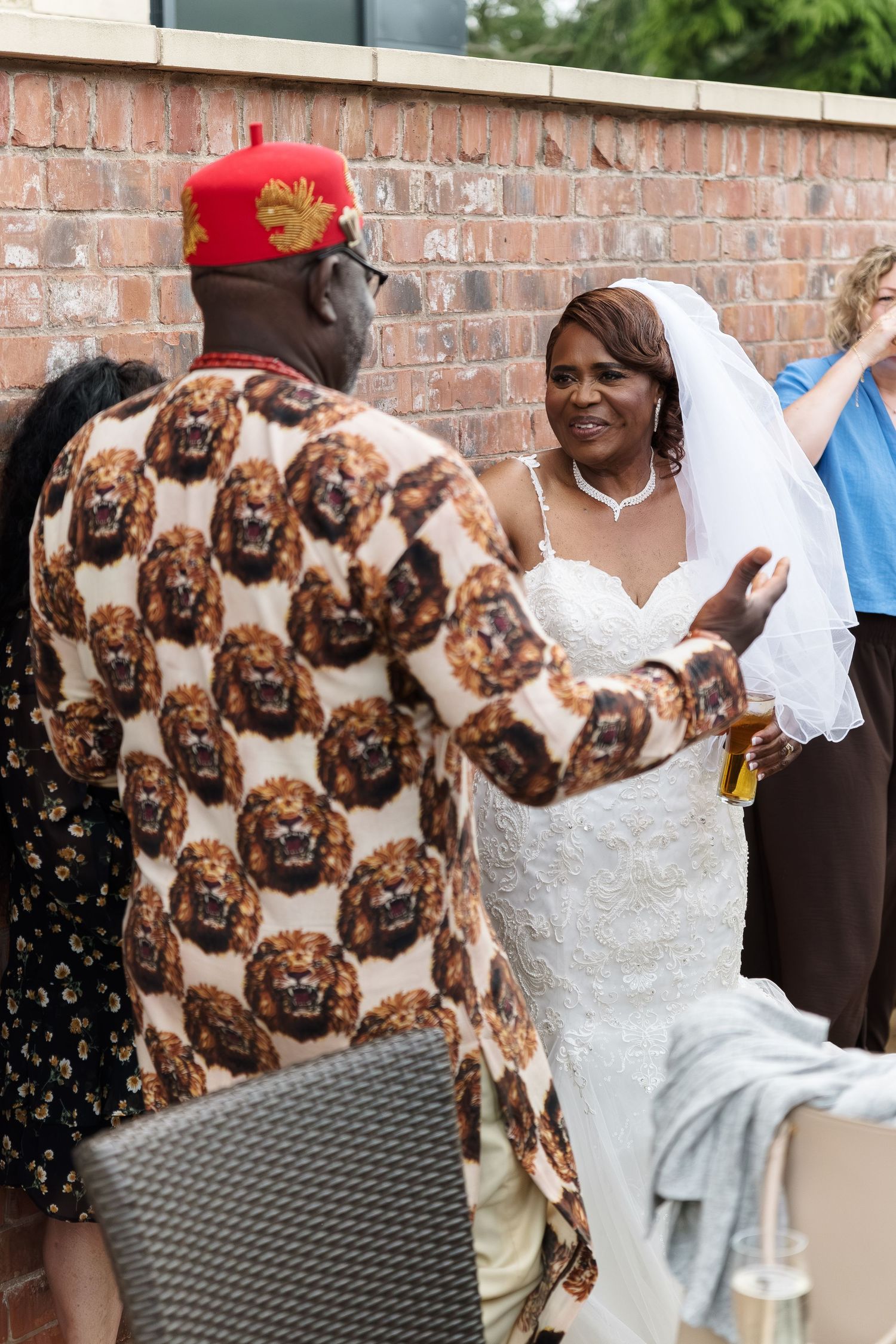
The guest raising his glass to camera, grey check jacket, gold chain, completely at ease. A fraction of a second of eye contact and a grin. The Sigma locked and fired. No hunting, no delay, no moment lost. That is the whole argument for fast autofocus on a wedding day in a single frame.
The natural candid at the garden table alongside it is the other version of this. Nobody performing, nobody aware. The background garden falls away behind the subject and the frame has the kind of warmth that makes drinks reception photography feel like what it actually is. Two images from the same part of the day, both from a lens that was invisible in the process.
What actually changed, and what didn't
I said primes are for when I want the image to move the client. That still stands. What changed is how the two-body setup works.
The secondary body runs the Sigma 56mm f/1.4. All day. That's always been my off-hand tele - for the aisle walk, for compression, for the moments where I need reach without being noticed. The 56mm doesn't move. It stays exactly where it belongs.
What the 17-40mm replaces is the lens-swapping on body one. Previously that body was running a wide prime or a standard prime depending on where I was in the day, with the inevitable friction of picking wrong or swapping at the wrong moment. Now body one covers 17mm to 40mm at f/1.8 throughout, and the decision tree collapses. Wide environmental shot to natural portrait length without a swap, without an aperture compromise, without a moment lost to changing glass.
The setup is actually more prime-centric than it looks on paper. There's a dedicated prime on one body the whole day. The zoom is on the other body being used with prime discipline - move first, frame second. The 16mm f/1.4 is still in the bag for when I specifically want that look or need to go wider than 17mm. But it's no longer the default solution for body one.
The trust this setup requires comes partly from the lens. The f/1.8 constant aperture means there's no temptation to compromise depth of field for convenience. The HLA autofocus means the system isn't part of your thinking when it matters. The rendering on the X-T3 produces files that look considered rather than corrected. But a lot of it comes from the prime habit being there already. The Sigma 17-40mm works best in the hands of someone who learned to move for the shot before they learned to adjust for it.
The honest trade-off
530 grams. Not light. The inner zoom design keeps the handling consistent and the balance steady, and the dust- and splash-resistant build means you're not wrapping it up when the sky turns. But you will feel it across a full day. That's not a reason not to buy it. It's a reason to know what you're buying.
At £779 from Clifton it is a serious investment in a single piece of glass. What it returns is a focal range that covers a full wedding day, an aperture that never drops below f/1.8, autofocus fast enough to get out of your head, and a rendering that works with the X-T3 rather than against it.
The verdict
Zooms still remove creativity. In the hands of a photographer who's learned to zoom instead of move, they always will. That's still true.
But the two-body setup with the 56mm prime on the secondary body and the 17-40mm on the main body is not an abandonment of prime shooting. It's a more efficient version of it. One body always has a prime on it. The other has a zoom being used like a prime photographer would use it, with the added flexibility that the X-T3 battery grip and muscle memory make invisible.
If the prime mentality is already there, the Sigma 17-40mm f/1.8 doesn't compromise it. It gives it more range and removes a problem you didn't fully clock until it was gone: the wrong lens on body one at the wrong moment.
That's not a change of position. That's a refinement of one.
Available at Clifton Cameras for £779 in Fujifilm X-Mount.
Shot with the Sigma 17-40mm f/1.8 DC Art on a Fujifilm X-T3.
Mr & Mrs Wyld | 21 Photography